Contents
The My Groups section of gPanel's User Portal allows users to view the Google Groups they're members of as well as manage memberships for the Google Groups they own.
View My Groups
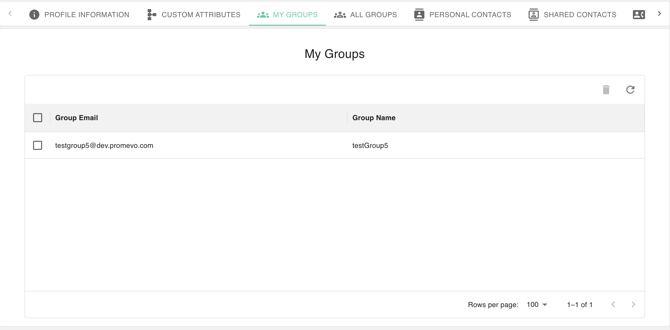
The Group List entails all the groups the user is a member of. It initially includes group email and group name.
Important: You will only be able to edit Groups that you are the owner of.
General Information

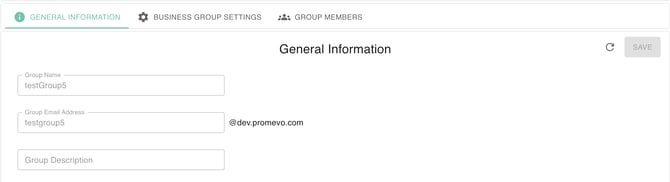
This section also includes the group's foundational descriptive elements: Group Name, Group Email Address, and a comprehensive Group Description. This information is editable only by the Group Owner. After making any changes, the user must click 'Save' to ensure the updates are applied.
Business Group Settings
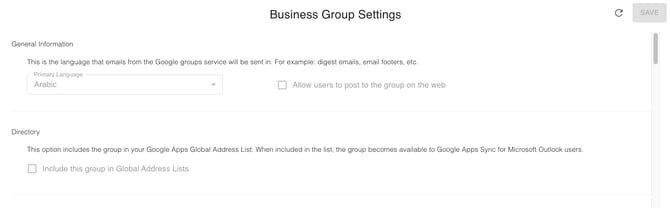
These configuration options are only modifiable by the Group Owner. They encompass the following subsections:
-
General Information: Allows viewing and editing of the Primary Language and setting the default web behavior for allowing user posts.
-
Directory: Controls whether the group is included in Global Address Lists (GAL), allowing you to enable or disable its listing for users.
-
Content Control: Provides the option to enable or disable the automatic archiving of all messages posted to the group.
-
Settings:
-
Posting Controls: Defines whether members can post content using the group's identity and whether authors are notified when a moderator rejects their submissions.
-
Spam Management: Specifies the method for handling and mitigating unwanted (spam) messages.
-
Reply Management: Determines how post replies are managed and routed within the group.
-
-
Role-Based Permissions: Defines which users (personnel) have the authority to View, Post, Manage, Assist, Leave, Join, and Discover the group.
-
Advanced: Enabling and Disabling the Group.
Add members
-
Select the Add Member button and then a Add Member Dialog Box will prompt.

-
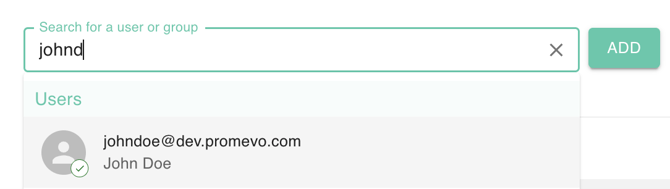
Select what you will be searching for (i.e. Users or Groups). Type In the name or email. Select one then click Add Button.
-
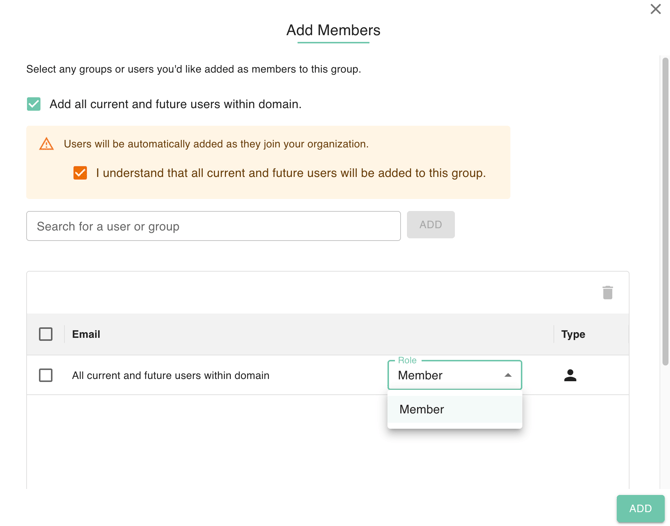
You must select a role for the newly added user. If the option to "Add all current and future users within the domain" is chosen, then all resulting members must also be assigned a role. The default role pre-selected is Member.
-
Click the Add button to add the new member to the group.
-
You can change the role of existing Group Members by selecting the member and clicking the pencil or edit icon.
-
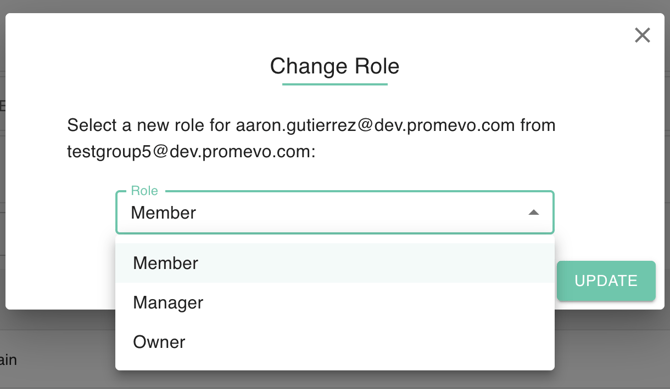
The Change Role Dialog box will appear. You must select the new role for the member. The options are Member, Manager and Owner.
-
Click Update to Save the Changes.