 User Management
 Group Management
 OU Management
 Gmail Management
 Drive Management
 Calendar Management
 Device Management
 Workspace Reporting
 Workspace Automation
 Billing & License Management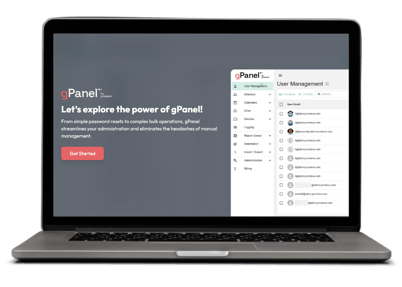

How the gPanel Rules Engine Takes Google Workspace Automation to the Next Level
 John Pettit : Dec 19, 2024, 5:00:00 AM
Discover how Promevo’s gPanel® Rules Engine can streamline Google Workspace management with powerful automation.


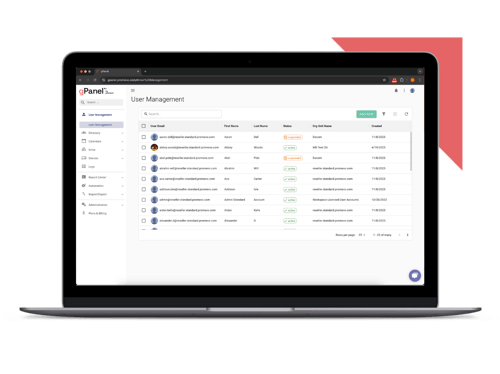
Simplify Google Workspace management with our most essential tools for user and email administration.
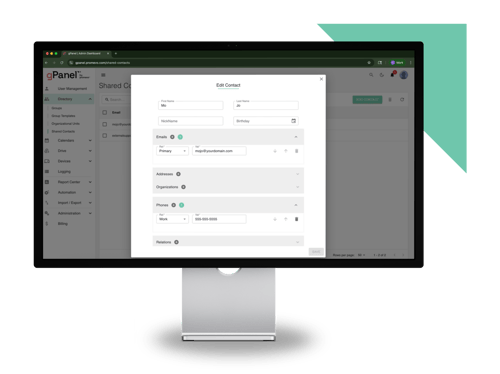
Unlock powerful automation, bulk actions, and reporting features to streamline and scale your admin workflows.
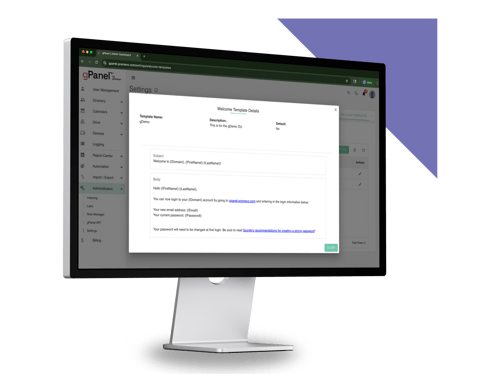
Take full control of your domain with advanced policies, APIs, and security tools built for large or complex environments.
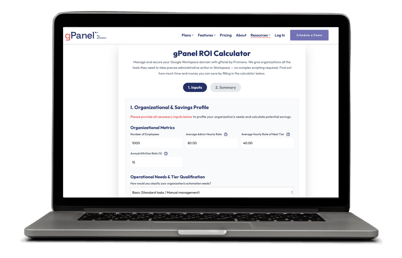

Google Workspace is so central to how your organization runs that automating it can feel risky.
What if something breaks? What if a policy fires at the wrong time? What if your entire organization is delegated to the intern?
You know, it's good to be deliberate and meticulous with the tools that 100% of your team uses every day.
Then you get a ticket to decommission 500 accounts. Or you're asked to update email signatures for every user in three OUs by Monday.
Suddenly, automation doesn't just look attractive; it looks necessary. That's exactly the problem gPanel® was built to solve.
Yes, you can automate Google Workspace safely, specifically, and without writing a single line of script. This guide covers what's possible natively inside Workspace, what requires a third-party tool, and where gPanel goes further than either.
Google Workspace automation refers to the process of streamlining and optimizing workflows within Workspace. With automation, organizations can enhance their efficiency and productivity by reducing manual tasks and improving collaboration.
By leveraging the automation capabilities of Google Workspace, businesses can save time, eliminate errors, and focus on high-value activities.
Google Workspace encompasses a range of popular applications such as Gmail, Calendar, Drive, Docs, Sheets, Slides, and Meet. These tools facilitate communication, collaboration, and document management, providing a full solution for modern work environments.
Workspace provides a cloud-based platform that enables real-time document editing and seamless collaboration, fostering productivity and teamwork.
Google Workspace offers various automation capabilities that help users streamline their workflows and maximize efficiency. By integrating Workspace with automation platforms, users can create automated workflows that connect different apps and enable data transfer between them.
Some of the most practical native automation capabilities include:
Automate data collection from various sources (social media ads, survey responses, form submissions) eliminating manual data entry and keeping information current.
Automate email notifications, forwarding, and attachment routing to cloud storage. Integration platforms extend this to CRM tools and ticketing systems.
Automate event creation and scheduling from form submissions, to-do lists, or external triggers. Recurring events and smart reminders keep schedules current without manual entry.
Connect form responses to Sheets, Docs, or external systems automatically. Eliminates manual data entry and accelerates processing of collected information.
Google Workspace workflow automation helps organizations optimize workflows, enhance collaboration, and improve productivity. By automating repetitive tasks and integrating various apps, businesses can focus on strategic initiatives and drive growth.
gPanel is an exclusive Google Workspace management and reporting solution from Promevo that provides administrators with all the tools they need to effectively manage users in their domain while safeguarding sensitive data.
Native Workspace automation covers a lot of ground, but it doesn't cover the admin layer. Policies, user lifecycle management, signature enforcement, contact sync, decommissioning; these are the tasks that eat hours every week and can't be handled with a Gmail filter or a Google Sheet formula. That's where gPanel operates.
gPanel doesn't just automate tasks. It automates the decisions behind them. When you define a policy, gPanel enforces it consistently, across every user, every time, without a ticket or a manual step in between.
Policies are custom automatic tasks in gPanel that perform any number of actions such as automatically removing or adding users to groups, changing Gmail settings, or moving users into different organizational units. Policies can be scoped to specific users, OUs, or domain-wide, and fire based on defined triggers without admin intervention.
gPanel lets you create and customize Gmail signature templates for any user or group in your organization. Signatures are applied automatically across employees. No chasing individuals to update their own, no inconsistency between departments or roles.
Decommissioning runs a set of pre-configured tasks on suspended user accounts to prepare them for eventual deletion, such as transferring data, removing access, reassigning resources. The process runs automatically each night, with a manual override available when you need it.
Contact sync automatically syncs a group of contacts from one source to another user, OU, group, or domain. Instead of hours of manual data entry to keep shared directories current, gPanel handles it on a schedule, silently, accurately, at scale.
Beyond admin-layer automation, Workspace itself offers built-in tools for everyday task automation. Here are the most practical examples across the core apps.
Email management is a crucial aspect of daily work routines, and Google Workspace provides automation features to streamline and enhance email-related tasks in Gmail. With the help of add-ons and integrations, users can automate actions and gain better context of their email communications.
Gmail add-ons available in the Google Workspace Marketplace enable users to view the full context of prospects and take action directly within their inbox. These add-ons allow for integration with business tools such as HubSpot, Aircall, and Intercom, providing a comprehensive email management experience.
Workspace offers automation features that enhance productivity in Google Docs and Sheets. In Google Docs, users can use predefined templates, custom scripts, and add-ons to automate repetitive actions, apply consistent styling, and generate personalized documents at scale.
In Google Sheets, automation can simplify data import and manipulation tasks. With automation tools, users can batch-import data from various sources and create custom workflows to automate resource creation and data processing, enabling efficient data management and analysis.
Automation tools allow users to automatically add events to Google Calendar based on triggers from other applications or form submissions. When a customer fills out a form to schedule an appointment, the automation workflow can create the corresponding event automatically, eliminating manual entry and ensuring accurate scheduling.
Users can also set up notifications and reminders for events through various channels (Google Chat, email or collaboration tools like Slack) keeping teams informed without manual follow-up.
Automation tools enable users to automate file transfers, backups, and synchronization between Google Drive and other applications or cloud storage services. When receiving email attachments, automation workflows can save them to specific folders in Drive automatically, eliminating manual file organization.
Automation also lets users define workflows to grant access to specific files or folders based on predefined conditions, ensuring secure and controlled sharing. Google Tasks can be integrated with Google Drive to create tasks directly from files, set due dates, and track progress.
Google Workspace provides several automation tools and third-party integration options. Here's how the main options compare.
A low-code platform that lets users build custom solutions without professional development experience. Supports HTML, CSS, and JavaScript, and comes pre-integrated with Workspace APIs and over 100 Google services. Best for: custom integrations, mail merge, sign-up workflows, and advanced Sheets automation.
Pre-built integrations and connectors that automate workflows across Workspace and other tools. Handle data syncing, task management, notifications, and data transformations without coding. Best for: cross-platform workflows, CRM integrations, and non-technical users.
Allow advanced developers to interact programmatically with users' email, calendars, files, and other data. Enable custom integrations and tailored automation at the infrastructure level. Best for: enterprise-scale custom solutions and unique business requirements.
Purpose-built for Google Workspace administrators. Automates the admin layer (user policies, lifecycle management, signature enforcement, contact sync, decommissioning) that Apps Script and third-party tools don't cover. No scripting required. Best for: IT teams managing user operations at scale.
Automating tasks within Google Workspace offers several benefits that significantly improve productivity and streamline workflows.
Automation eliminates manual and repetitive tasks, freeing employees to focus on strategic, high-value work rather than account management and data entry.
Automation reduces errors and ensures consistent, standardized processes. Tasks are performed accurately at speed, regardless of who's on shift.
Real-time access to updated information and automated notifications keep teams aligned without manual coordination overhead.
Workspace APIs and integration options let businesses automate workflows across different applications and systems, expanding automation well beyond Google's own tools.
With Apps Script and gPanel's policy engine, organizations can tailor automation to their specific workflows rather than adapting to a rigid, one-size-fits-all model.
If you want to use Google Workspace to its full potential, gPanel gives you the admin-layer control to make that happen. With our comprehensive Google Workspace management and reporting platform, we can help you automate the work that's been slowing your team down and give you the visibility to keep your domain secure as you grow.

 John Pettit : Dec 19, 2024, 5:00:00 AM
Discover how Promevo’s gPanel® Rules Engine can streamline Google Workspace management with powerful automation.
 John Pettit : Jun 19, 2023, 5:00:00 AM
Automated Google Workspace management can help you to save time, improve efficiency, and reduce errors.
 John Pettit : Jul 24, 2024, 5:15:00 AM
Discover how Google Workspace automation with gPanel can streamline tasks for administrators, from user provisioning to compliance monitoring.