Every organization strives to maintain a professional image, yet consistent and well-designed email signatures are often overlooked. Many companies struggle to standardize email signatures across their workforce, leading to a disjointed brand image and communication inconsistencies.
Creating and managing uniform email signatures for an entire organization poses several challenges. From ensuring brand coherence to updating contact information seamlessly, these tasks can be time-consuming and prone to errors if handled manually.
78%
of UK marketers say consistent branded signatures are important in all company emails —
Exclaimer, 2023
70%
of professionals believe a well-designed signature increases their credibility —
MailTrap
55%
of employees are more likely to open an email from a sender with a well-designed signature —
HubSpot
In this guide, we'll explore the key elements of an effective company email signature and how you can manage them efficiently using the gPanel® platform.
Why Professional Email Signatures Matter
Email remains a primary mode of business communication, making it vital for companies to project a professional image with each message sent.
A well-designed email signature does more than just provide contact information. It reinforces brand identity, drives traffic to your website, informs customers, and maintains a consistent corporate image across all communications. For managers and above, ensuring that these signatures are uniform and professional across the company is critical in maintaining a cohesive brand presence.
What Makes a Good Company Email Signature?
Creating an effective company email signature goes beyond just slapping on a name and contact information. It requires thoughtful design and strategic placement of elements to ensure that the signature is both professional and functional.
Here are some key factors Google Workspace admins and leadership should keep in mind.
Essential Elements
A professional email signature should include several key components to ensure it is informative and reflects the company's brand. At minimum, every signature in your organization should contain:
- Full name and job title — establishes sender identity and authority at a glance
- Company name and logo — reinforces brand recognition with every send
- Contact information — direct phone number and email address for easy follow-up
- Social media profile links — adds additional touchpoints for recipients to engage with your brand
- Legal disclaimers or confidentiality notices — required in many industries and regions to safeguard communications
Design Factors to Consider
Beyond what you include, how you design your signature shapes whether it reinforces your brand or undermines it. Use the table below as a quick reference when building or auditing your organization's signature templates.
| Factor |
Best Practice |
Common Mistake to Avoid |
| Size & Format |
Use a clean, lightweight design that renders correctly in all email clients and on mobile |
Large images or complex layouts that break on certain platforms |
| White Space |
Lead with name and title, follow with contact info, then additional elements — guide the reader's eye naturally |
Dense, unstructured content that buries key details |
| Fonts & Colors |
Match your brand's style guide; limit to one or two font families and a consistent color palette |
Multiple fonts or bright, clashing colors that look unprofessional |
| Images |
Optimize for fast loading; host images on reliable servers; test across devices and email clients |
Oversized or locally hosted images that block delivery or fail to render |
| Consistency |
Standardize across all users so every email reflects the same brand identity |
Letting employees self-manage templates, which creates drift over time |
| Brand Alignment |
Treat the signature as an extension of your brand — it should match your website, collateral, and marketing materials |
Signatures that don't match other brand touchpoints, creating a disjointed experience |
How to Manage Company Email Signatures in Google Workspace
To manage company email signatures across an entire organization in Google Workspace, you can use third-party tools like gPanel, a powerful Google Workspace management platform built by the Google Premier Partner Promevo. Admins can utilize gPanel to streamline this process effectively, ensuring consistency and compliance with corporate branding and communication standards.
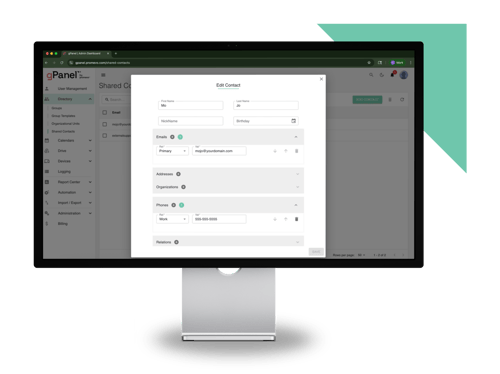
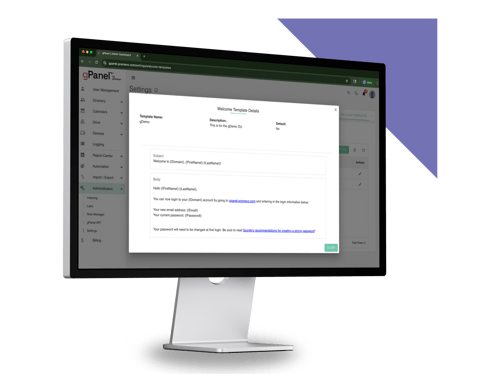
Admins can start by creating or editing signature templates in gPanel. This is done by integrating Google's profile fields, including links, images, and the profile picture, which can then be applied across users, groups, or the entire domain. Custom schema fields and conditionals can also be added to tailor the signatures to specific needs or roles within the organization.
Once the templates are ready, gPanel allows these to be automatically applied to all employees, removing the need for manual updates by each user. This automation ensures that every outgoing email adheres to company standards without requiring individual input or frequent checks.
gPanel provides a centralized management interface where these signatures can be monitored and updated. Administrators have granular control over the signature settings, which can be crucial for maintaining the organization's professional appearance in its email communications.
The good news is that gPanel supports automation of all of these processes. Policies can be set to automatically update or change signatures based on certain triggers or administrative changes, making the management of email signatures less labor-intensive and more error-proof.
🎬 gPanel Office Hours
See gPanel's Email Signature Management Tools in Action
Watch a live walkthrough of how to build, deploy, and automate branded email signatures across your entire Google Workspace domain.
Get Started With gPanel
Maintaining a professional and cohesive brand image is more important than ever, and an effective email signature plays a huge part in your efforts. Following best practices for creating email signatures and leveraging the powerful features of Promevo's gPanel platform can ensure that your company's communications are both professional and impactful.
Ready to see how gPanel can transform your email signature management? Schedule a demo today and take the first step towards a more cohesive and professional brand image.




 User Management
 Group Management
 OU Management
 Gmail Management
 Drive Management
 Calendar Management
 Device Management
 Workspace Reporting
 Workspace Automation
 Billing & License Management


 Christine Page
 Christine Page : Jul 31, 2024, 4:45:00 AM

 Brandon Carter