 User Management
 Group Management
 OU Management
 Gmail Management
 Drive Management
 Calendar Management
 Device Management
 Workspace Reporting
 Workspace Automation
 Billing & License Management

1 min read
What Is Role-Based Access Control & How to Implement It in Google Workspace?
 Colin McCarthy : Nov 6, 2025, 5:00:00 AM



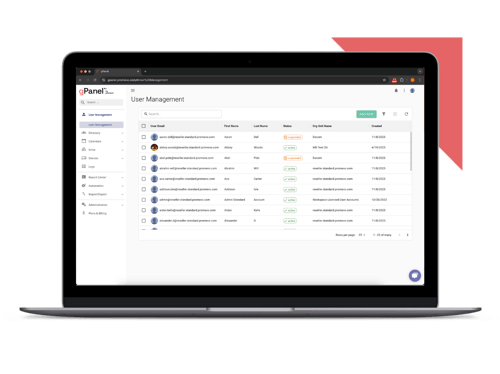
Simplify Google Workspace management with our most essential tools for user and email administration.
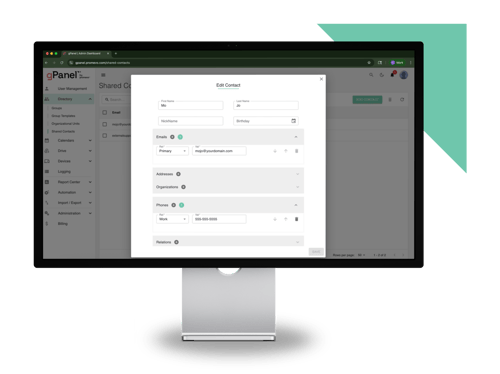
Unlock powerful automation, bulk actions, and reporting features to streamline and scale your admin workflows.
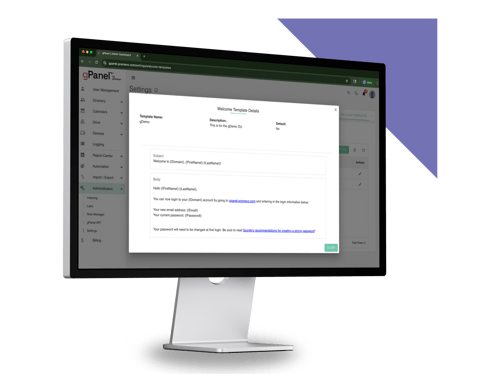
Take full control of your domain with advanced policies, APIs, and security tools built for large or complex environments.
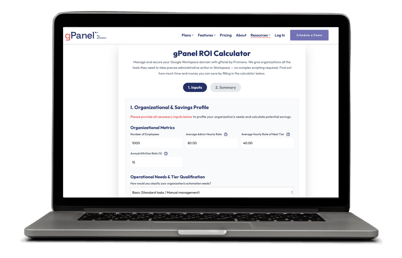

You manage an environment that keeps expanding. New users come in, teams shift, projects end, and contractors cycle in and out. This pace often leaves behind quiet traces inside your Google Workspace directory. Dormant accounts sit in the background without drawing attention.
The problem grows slowly until you notice strange license waste, cluttered reports, or unexpected security gaps. You gain control once you recognize what dormant account sprawl looks like and how you can clean it up with predictable structure.
Dormant account sprawl describes inactive user profiles that stay inside your directory even though no one uses them. Former employees, contractors, interns, seasonal staff, and old test profiles often fall into this category. These accounts still hold licenses. They still hold permissions. They still appear in every report you run. They add noise that makes your environment harder to manage.
You also pay for them in multiple ways. Each dormant account raises your licensing costs. Each one creates a security gap because no one monitors the activity anymore. Threat actors scan for old accounts because those profiles rarely trigger attention from internal teams. Dormant accounts also slow down your audits and reviews because they clutter every list you look at.
You can solve this once you adopt a structured process supported by gPanel. You gain deeper activity reporting, reliable dormancy criteria, and safe bulk actions that protect your data while lowering your costs. You also gain long term prevention tools that help you avoid another wave of sprawl.
Your cleanup effort starts with a strong definition. You need accurate criteria before you make any decommissioning decisions.
Many admins rely on the Last Login field in the Google Admin console. This field gives you the date of the last sign in event for that account. You receive only one data point, and that data point rarely reflects real activity.
A user can sign in once and avoid meaningful work for months. Another user can remain active inside Gmail or Drive without triggering certain login events. Workspace activity spreads across multiple apps, and each app produces its own signals. You need those signals to understand whether a user remains active.
gPanel gives you a full picture through usage based dormancy criteria. You see how users interact with Gmail, Drive, Calendar, and other core apps. You set rules that reflect real patterns inside your organization. You can search and filter based on:
This view shows you the difference between a legitimately inactive user and someone who signs in rarely but still contributes to ongoing work. Your definition becomes stronger, cleaner, and far more reliable than any single sign in metric.
You protect your environment when you handle account retirement with care. A quick deletion might look efficient, but it creates major problems. Lost data, broken workflow ownership, missing project files, inaccurate records, and group access issues often appear when teams skip the safety steps. You avoid these pitfalls when you use a consistent decommissioning checklist.
You start by securing data and preserving anything that connects to business continuity. This step confirms that nothing disappears when you remove or modify the account. You run the same sequence every time so your team never misses a requirement.
Your decommissioning checklist includes:
gPanel supports each of these actions with bulk tools so you avoid repetitive work. You also avoid inconsistencies across departments or user types. Once you finish this checklist, you can choose the correct decommissioning action based on your policy and timeline.
You have three main options inside gPanel:
A consistent workflow protects you from interruptions and gives you a clear record of every action your team performs. You also avoid last minute recovery tasks because you validate each requirement before the account leaves your environment.
Your first cleanup gives you a fresh start, but long term success depends on prevention. Account sprawl often returns when teams follow inconsistent offboarding habits. You gain real stability once you turn your cleanup logic into an automated process.
You can build a complete offboarding workflow inside gPanel. You define a multi-step policy that moves files, delegates mail, removes licenses, updates group memberships, and applies a suspension period. This automation removes human error from the equation. Your environment stays clean because your workflow runs the same way every time.
Scheduled audits also keep your directory healthy. You can set the Dormant User Account Report to run quarterly or twice a year. These scheduled reviews catch issues early so you never face a large backlog again. A light cleanup every few months replaces emergency projects that pull your team away from other goals.
Routine visibility supports your long term directory hygiene. gPanel gives you that visibility through usage based reporting, automated workflows, and simple bulk actions. You maintain control because your tools handle the heavy lifting and your policies stay consistent across your entire organization.
You gain stronger accuracy because you look at real application activity, not just isolated login data. You build dormancy criteria that reflect your environment instead of relying on default values. You make better decisions because your criteria show the complete engagement picture.
You also reduce manual work. gPanel performs bulk transfers, bulk license actions, and bulk suspensions without forcing you to repeat the same steps for every user. Your team saves time and stays focused on high value initiatives. You also reduce risk because your workflow applies the same safety steps for every account.
You gain a cleaner directory, stronger security, and lower licensing costs. You protect your business continuity. You remove clutter that slows down audits and reviews. You build confidence in your data because every file and message lands in the right place.
For help building your dormancy rules, reviewing your account landscape, or designing a full offboarding workflow, schedule a gPanel demo. We’ll show you how to manage account sprawl with clarity and control.


1 min read
Colin McCarthy : Nov 6, 2025, 5:00:00 AM

1 min read
 Brandon Carter : Aug 14, 2025, 5:00:00 AM
When you’re setting up Google Workspace for your business, the admin account is more than just another login; it’s your command center. Get it right,...

1 min read
Brandon Carter : Aug 17, 2023, 5:00:00 AM
Decommissioning Google Workspace accounts isn’t just an IT cleanup task. When someone leaves, changes roles permanently, or no longer needs access to...