Let’s be honest: most Google Workspace environments weren’t "designed" — they were inherited. Over time, permissions creep, admin access spreads, and suddenly you’re in a bind. Do you give a new hire Super Admin status just so they can reset a password, or do you let them stay blocked from doing their job?
This "all-or-nothing" struggle is common, but it’s a security nightmare. As teams become more distributed, the need for a "scalpel" instead of a "sledgehammer" for permissions is more urgent than ever.
Here is how to navigate the native roles in the Google Admin Console — and where to turn when you need more precision.
The All-or-Nothing Dilemma in Google Workspace
The goal is simple: grant only the access required for a specific job. Nothing more. In practice, this often breaks down:
- Super Admin becomes the default for convenience
- Managers request access that does not fit cleanly into native roles
- IT hesitates to delegate because rollback feels risky
The Admin Console provides roles, but many of them act like blunt instruments. You assign a bundle of permissions even when someone needs just one action. That gap creates pressure. gPanel exists to turn that blunt instrument into a scalpel.
Before you get there, it helps to understand what Google gives you out of the box.
Native Pre-Built Roles in the Google Admin Console
The Google Admin Console provides several pre-built roles that Workspace administrators can use to delegate. These native configurations are a great starting point, but they’re hard-coded — you can’t tweak them without creating a custom role.
Super Admin
Super Admin holds full control across your domain. Settings, users, data, security, and billing all fall under this role. Best practice keeps this role tightly restricted:
- Assign at least two Super Admins for redundancy
- Avoid exceeding five whenever possible
- Protect accounts with strong authentication
This role exists for emergencies and architecture changes, not day-to-day operations.
Groups Admin
Groups Admin manages group membership and access settings. This role works well when:
- Teams self-manage mailing lists
- Managers control access to shared resources
- Collaboration depends on dynamic group changes
Groups Admin does not grant broader user or system access, which makes it easier to delegate safely.
User Management Admin
User Management Admin handles non-admin accounts. This includes:
- Creating and deleting users
- Resetting passwords
- Managing profile information
This role often supports onboarding and offboarding processes. It does not allow changes to admin roles or core security settings.
Help Desk Admin
Help Desk Admin focuses on support tasks. This role allows:
- Password resets
- Account recovery
- Profile viewing
Many organizations assign this role to entry-level IT or outsourced support because it limits exposure while enabling fast assistance.
Services Admin
Services Admin manages application-level settings. This includes controls for:
- Google Drive
- Calendar
- Gmail
- Chrome devices
This role works when responsibility centers on service configuration rather than user identity.
Niche Admin Roles
Google also offers specialized roles for specific services:
- Mobile Admin
- Storage Admin
- Google Voice Admin
These roles address narrow operational needs but still rely on fixed permission bundles.
Native roles establish structure, but flexibility remains limited.
Custom Roles in the Google Admin Console
Google now allows custom roles within the Admin Console. You can select from available privileges and build roles that better reflect job functions.
This improves delegation in cases like:
- Managing Drive settings without touching users
- Viewing reports without modifying configuration
Even so, there are limitations. Custom roles often still feel clunky because:
- Privileges bundle API access together
- Some permissions require broader scope than expected
- Testing roles takes time and caution
Why Native Roles Only Get You So Far
As environments grow, role management becomes harder. You start seeing patterns:
- Managers need visibility into specific teams
- Legal needs access without operational risk
- HR needs to trigger workflows without admin exposure
Native roles struggle to express that nuance. That’s where admin tools like gPanel enter the picture.
gPanel: Your Workspace Command Center
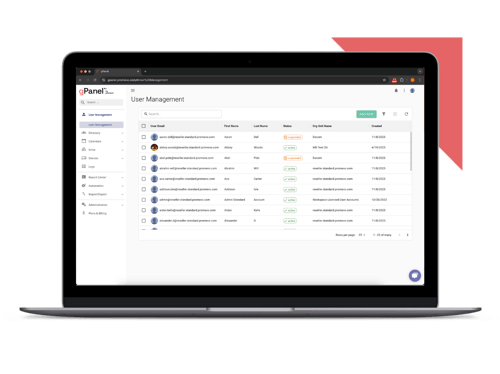
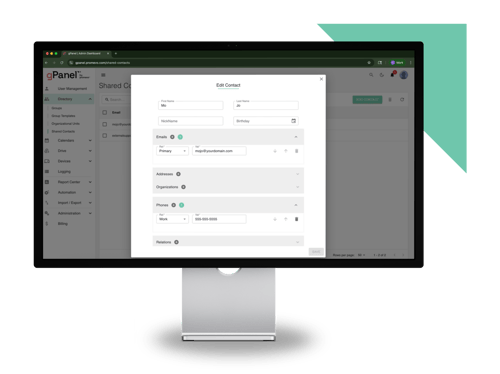
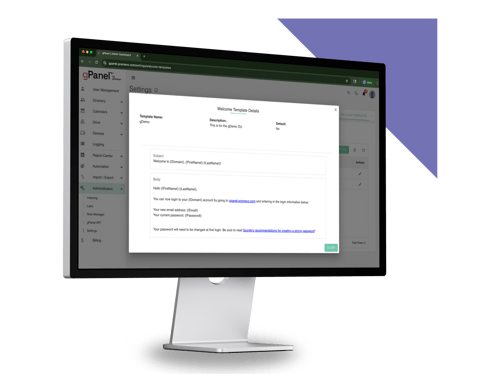
gPanel doesn't replace the Admin Console; it supercharges it. It uncovers "micro-permissions" that Google doesn't expose natively.
With gPanel, you can:
- Segment by Scope: Let a manager see Drive files for only their department.
- Audit Everything: Get a crystal-clear trail of who did what, which is often much easier to read than native logs.
- Safe Delegation: Give HR or Legal the specific tools they need (like Vault exports) without handing them any system configuration keys.
Practical Use Cases for gPanel Granularity
Granular permissions matter most when responsibilities overlap. Here are some common scenarios where a tool like gPanel can help:
Regional Managers
With gPanel, you can allow managers to oversee users within a specific location or organizational unit. They get to manage access without touching the rest of the domain.
Legal & Compliance Teams
gPanel enables you to create roles that support:
- Content searches
- Vault exports
- Evidence collection
These roles exclude password resets and system configuration.
HR Onboarding & Offboarding
With gPanel, you can give HR the ability to trigger workflows tied to user lifecycle events. They complete tasks without entering the Admin Console or seeing unrelated settings.
Improve Role Granularity & Security with gPanel
Modern Workspace governance is about balance. You want to empower your team to move fast without putting the entire domain at risk.
Native roles provide the foundation, but gPanel provides the resilience. When your permissions match your responsibilities, your team moves faster, and your data stays safer.
Ready to see granular permissions in action? Schedule a gPanel demo today and see how we make least-privilege access sustainable.



 User Management
 Group Management
 OU Management
 Gmail Management
 Drive Management
 Calendar Management
 Device Management
 Workspace Reporting
 Workspace Automation
 Billing & License Management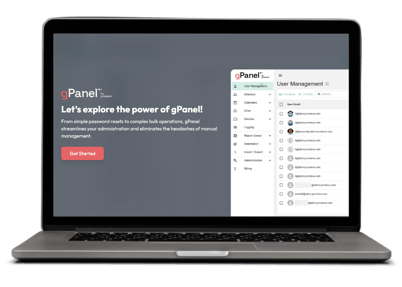


 Brandon Carter

 Brandon Carter : Nov 27, 2024, 5:00:00 AM