 User Management
 Group Management
 OU Management
 Gmail Management
 Drive Management
 Calendar Management
 Device Management
 Workspace Reporting
 Workspace Automation
 Billing & License Management

1 min read
Tips for Organizing & Securing Your Company's Google Drive
 Colin McCarthy : Dec 18, 2025, 5:00:01 AM
Thank goodness the days of messy filing cabinets and desks littered with stacks of papers are (mostly) behind us.



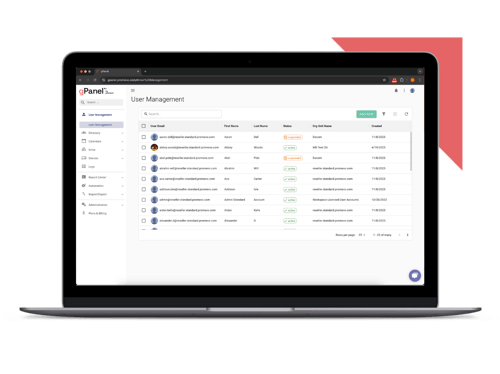
Simplify Google Workspace management with our most essential tools for user and email administration.
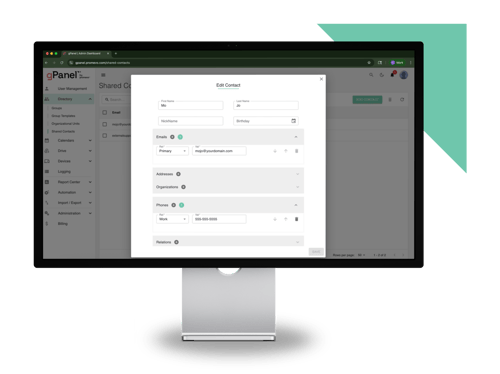
Unlock powerful automation, bulk actions, and reporting features to streamline and scale your admin workflows.
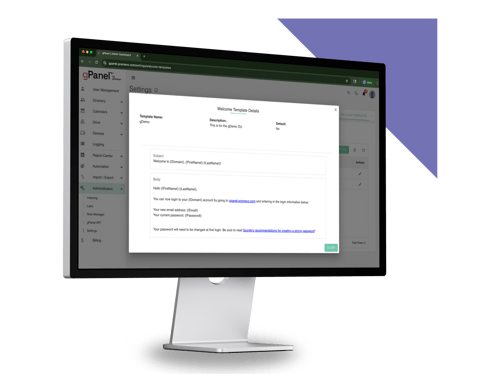
Take full control of your domain with advanced policies, APIs, and security tools built for large or complex environments.

Remote collaboration. Hybrid schedules. Distributed teams.
If you feel like your “ever-changing” digital workspace is cluttered, you’re not wrong.
As employees join, leave, or shift roles, your organization’s Google Drive can quickly become a graveyard of unmanaged data. This digital clutter isn't just a matter of organization — it poses real risks to your storage limits, compliance posture, and data security.
Digital clutter is more than a nuisance; it is a security risk that impacts storage limits and compliance.
- gPanel by PromevoFor Google Workspace admins, two specific types of files are the primary enemies: Dormant Files and Orphaned Files.
| File Type | Definition | Primary Risk |
|---|---|---|
| Dormant Files | Files not accessed, modified, or shared in a long time (e.g., 2+ years). | Wasted storage & search inefficiency. |
| Orphaned Files | Files with no active owner, often left behind after employee offboarding. | Compliance gaps & data loss. |
While the native Google Admin console is powerful, it often lacks the fine-grained reporting and bulk action capabilities needed for a full domain cleanup. This is where gPanel by Promevo becomes an essential tool for the modern IT admin.
Dormant files are a silent drain on your resources. The goal is to identify them and either archive or delete them to free up space.
"Dormant" is a subjective term that varies by organization. You must set your own criteria based on your retention policies, such as the last-modified date, last-viewed date, or specific file types.
gPanel’s advanced reporting enables admins to filter the entire domain’s Drive data using custom criteria. For example, you can quickly generate a report listing all files that have not been accessed in the last 365 days. This provides an immediate, actionable list of potential clutter.
Orphaned files are a more critical security and access problem. When a file loses its ownership lineage, it becomes invisible to many regular Google Admin console processes.
"Consider this: Your Head of Marketing leaves. Their account is deleted without a transfer. Suddenly, the entire Q3 marketing plan becomes inaccessible. The data exists, but no one can control it."gPanel® Use Case
Restoring these files natively often requires complex workarounds. gPanel simplifies this with the Ownership Transfer Feature:
Cleaning up is good, but prevention is better. Implementing strong policies in gPanel can stop these files from accumulating in the first place.
Digital clutter is more than just a nuisance — it’s a risk. By leveraging gPanel's advanced reporting and bulk administration features, you can ensure your Google Workspace remains secure, organized, and efficient.
Schedule a demo to see how gPanel can help you locate orphaned files in your domain today.



1 min read
Colin McCarthy : Dec 18, 2025, 5:00:01 AM
Thank goodness the days of messy filing cabinets and desks littered with stacks of papers are (mostly) behind us.

1 min read
 John Pettit : Aug 27, 2026, 5:00:00 AM
Native Google Drive security features are the built-in protections inside Google Workspace: AES-256 encryption, two-step verification, DLP rules, and...

1 min read
Colin McCarthy : Jan 22, 2026, 5:00:00 AM
You manage an environment that keeps expanding. New users come in, teams shift, projects end, and contractors cycle in and out. This pace often...