Every growing Google Workspace environment faces the same pressure: move fast, solve tickets quickly, avoid bottlenecks.
Someone needs to reset a password. Someone else needs access to a Shared Drive. A department requests control over its own users.
The quickest fix often feels obvious. Grant Super Admin access and move on, right?
That shortcut creates a long-term security problem.
Super admin bloat — the quiet accumulation of high-level privileges across your organization — expands your attack surface far beyond what most leadership teams realize. In hybrid and remote environments, where identity is the new perimeter, that risks compounds quickly.
If you care about Google Workspace security, overpermissioning should sit near the top of your risk register.
The “Convenience” Trap
Super Admin access solves friction immediately. It removes waiting. It bypasses role configuration. It eliminates escalation paths.
It also ignores the Principle of Least Privilege.
The Principle of Least Privilege (PoLP) states that users should receive only the access required to perform their job, nothing more.
In practice, many organizations drift toward the opposite model:
- Help desk staff receive global admin access for password resets
- Department managers gain elevated rights to manage a single team
- External consultants retain broad privileges after project completion
- Temporary fixes become permanent permissions
Over time, no one revisits those decisions. The environment expands. Admin sprawl sets in.
You may not notice the risk until something breaks — or worse, until something gets breached.
The Hidden Risks of Super Admin Overload
A Super admin in Google Workspace holds unrestricted control. That level of power demands scrutiny.
“God Mode” Access
A Super admin can:
- Reset any user’s password, including executive leadership
- Disable security controls
- Modify authentication settings
- Delete users, data, or entire organizational units
- Grant additional Super Admin rights
That scope exists for a reason. Organizations need ultimate control. The problem emerges when too many accounts hold it.
Human Error
Security conversations often focus on malicious insiders. Accidental damage occurs far more often.
A well-meaning admin can:
- Delete a root-level OU
- Misconfigure global security policies
- Remove retention rules
- Expose data through incorrect sharing settings
Excessive privilege increases the blast radius of a simple mistake.
Phishing & Credential Compromise
Super Admin accounts often attract attackers.
If one privileged account falls to phishing emails, credential stuffing, or session hijacking, the entire domain becomes vulnerable. Remote work environments amplify this exposure. Admins operate across devices, networks, and time zones.
Fewer Super Admins mean fewer high-value targets.
Compliance & Audit Complexity
Thirty or more Super Admins create audit confusion. When a critical change occurs, you need clear answers:
- Who made the change?
- Why did they have that level of access?
- Was the action within their scope of responsibility?
Without disciplined access control, audit trails become noise instead of clarity.
Where Native Google Workspace Roles Fall Short
Google Workspace offers predefined roles and custom role creation.
On paper, that seems sufficient. In practice, many teams encounter limitations.
The Binary Access Problem
Organizations often feel stuck between extremes:
- Standard User — too little access
- Super Admin — too much access
When native roles fail to match operational needs, teams default to Super Admin privileges because work must continue.
Limited Granularity
Delegating narrow authority proves difficult in complex environments.
You may want someone to:
- Manage users within one department
- Reset passwords but not modify security policies
- Administer one Shared Drive without directory-wide visibility
Achieving that precision inside the native console can become time-consuming and restrictive. Convenience wins again. Super Admin access spreads.
Case Study: Trimble
Trimble, a global technology leader with more than 11,000 employees, faced this challenge directly.
Years of growth through mergers and acquisitions created a layered and complex Google Workspace environment. Over time, the organization accumulated 35 Super Admins.
At that scale, overpermissioning presented significant risk.
Granular Delegation With gPanel
Trimble implemented gPanel to create delegated roles aligned with real operational needs.
Instead of handing over full Super Admin rights, they assigned tightly scoped permissions:
- Role-based access tied to specific tasks
- Department-level administrative authority
- Controlled visibility into defined organizational units
Teams received the tools required for daily work without exposing the entire domain.
Visibility & Cleanup
Trimble also used gPanel reporting to audit historical access. After ending a decades-long relationship with an external firm, the organization validated that no residual administrative access remained.
That level of visibility reduced uncertainty and strengthened internal controls.
The Result
Trimble reduced its Super Admin count significantly and established a more transparent administrative framework. Security posture improved without slowing operations.
The lesson applies broadly. Growth demands structure.
How gPanel Addresses Admin Sprawl
Reducing Super Admin counts requires more than policy. It requires tooling that supports granular delegation, auditing, and lifecycle control.
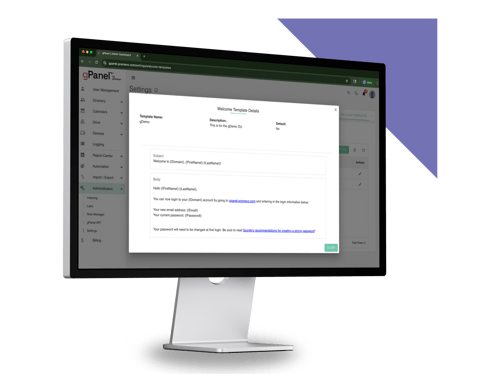
Custom, Task-Specific Roles
gPanel enables highly specific roles that align with real-world responsibilities.
Examples include:
- Help Desk Level 1 — password resets only
- HR Admin — visibility into specific OUs
- Department IT Lead — limited user and group management
- Drive Manager — Shared Drive administration without directory control
This structure supports PoLP without introducing operational friction.
Centralized Administrative Auditing
gPanel enhances visibility into administrative actions across your Google Workspace environment.
You gain clearer insight into:
- Role assignments and changes
- Privileged actions across OUs
- Historical access reviews
- Delegated admin behavior
Leadership gains confidence in oversight. Security teams gain actionable data.
Automated Offboarding for Admins
Admin access often lingers after role changes.
gPanel helps enforce consistent offboarding workflows so that when an administrator leaves or transitions roles, elevated access is removed systematically.
This reduces the risk of “digital ghosts” — dormant accounts are no longer being managed.
Security as Operational Discipline
Reducing Super Admins does not signal distrust. It signals maturity.
Modern organizations operate in distributed, cloud-first environments. Identity controls define the security perimeter. Overpermissioning undermines that perimeter.
When you:
- Align access with responsibility
- Limit high-level privileges
- Monitor administrative actions clearly
- Remove access promptly when roles change
You transform Google Workspace security from reactive defense into structured governance.
Super admin bloat develops quietly. Correcting it requires intention.
If your environment has grown through rapid hiring, mergers, remote expansion, or shifting responsibilities, now is the time to assess how many accounts truly require unrestricted control.
Security improves when access becomes deliberate. Operational excellence follows.


 User Management
 Group Management
 OU Management
 Gmail Management
 Drive Management
 Calendar Management
 Device Management
 Workspace Reporting
 Workspace Automation
 Billing & License Management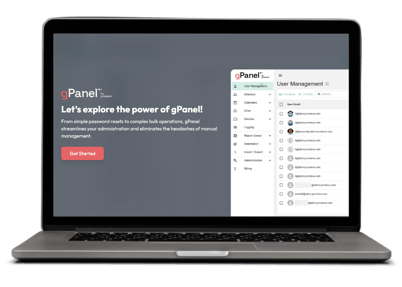


 Colin McCarthy

 Colin McCarthy : Jan 23, 2026, 5:00:00 AM